Thursday, December 22, 2011

The Rise the American Anti-Hero

What historical factors influenced the rise of the American Anti-Hero in cinema and how does this hero contradict the Classic Hollywood Ideology.
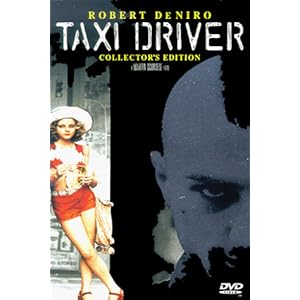

"An anti-hero in today's books and films will perform acts generally deemed 'heroic', but will do so with methods, manners, or intentions that may not be heroic" This connects well with Travis Bickle, who is the main character within the movie Taxi Driver. Travis is an unlikey hero which is a character who may not be conspicuously flawed, but simply an ordinary person who thrust into extraordinary circumstances. He helped a young girl, Iris, get out of a horrible life of prostitution but he was not the typical hero. He was a shy guy who simply had nothing but his job as a taxi driver. He tried to commit suicide yet he was considered a hero to his city.

"Anti-heroes became these altruistic characters that were supposed to be representations of real people...or real Americans. Even if they were being played by some of the most chiseled and good looking people in the world, the anti-hero got past that by getting dirty and wearing the clothes of the common man." Scorsese did a good job at making Travis Bickle this type of man. He was not the brave, strong, and good looking man that is the typical hero. Travis was dirty and a low life, which shows that anyone can be a hero. You don't have to be an extrodinary man to be a hero, Travis made a difference in Iris' life as well as her parents life.
"Towards the end of the 60s and into the 70s filmmakers began to tweak the anti-hero, giving the role a darker or even non-heroic quality." Not only did Travis resemble a common american he also was a dark type of character who had no heroic qualities at all. He resembles a bum more than a hero.

Article- Intensified Continuity

Within the article, David Bordwell, discusses why continuity has intensified so much over the last few years in Hollywood cinema. Continuity is an uninterrupted succession or flow; a coherent whole. This helps films have a continuous flow and helps the movie make more sense to the audience. 

In the beginning of hollywood cinema directors would keep a steady shot and keep it running with no editing at all. As hollywood has progressed so has cutting and editing. Movie makers today do not have a continuous shot that can go on for hours. Producers can shoot one scene one day and another the next and with the final outcome, they can edit them continuously together. This shows how much technology has inproved vastly over the last few decades. "Today, most films are cut more rapidly than at any other time in US studio filmmaking." David states this within the article, which proves the point that continuity has definitely intensified over the last few decades. The technology will slowly keep progressing.

Another example that hollywood cinema has changed is with action scenes. Before the shots would stay static and the people would revolved around the camera but in film making today, the camera revolves around the actors. "More important, no film is one long action sequence." Producers have learned how to change angles from close ups to long shots or wide shots to get a variety of shots so that the audience is more interested.

"It's a shame that most films rely so much on tight close-ups all the time, filling a screen with an actor's head like you might for television" This was said by Phil Meheux and this is can show what has been lost with this change. Producers tend to use close ups to intensify the dramatic scenes but sometimes that doesn't always do a good job. A variety of shots is better than only one type. But like Phil said it depends on what type of style the director is going for.

Tuesday, December 13, 2011

Advanced Editing Notes Questions: 3. Soviet Montage and 4. Realism

3. Soviet Montage and Formalism

a. What was Pudovkin's concept of constructive editing and how did it manifest itself on film? 

Pudovkin wanted to show the audience a new type of style and connect the editing with his shots. He believed that close ups reveal more of a meaning and help the movie. 

b. What was the Kuleshov effect and give me an example of how is it used in today's film's?


The Kuleshov Effect is a film technique that helps the audience understand the emotions more. An example of this is a shot of soup, and then a man. It continues to go back a forth from each shot so that us, as the audience, understands the man is hungry. This is used in many movies so that directors can connect two things without having both of them in the same shot.  

c. What was Eisensteinian Montage and how does it work in the "Odessa Step" sequence?


The Eisensteinian Montage is when a shot contracts to images. In "Odessa Step" the two conflicting images are the boy and the woman. They are two different shots that correlate to one another to create a stronger effect. 
 
4. Andre Bazin and Realism


a. What were Andre Bazin's frustrations with Classical and Formalistic film making?


Andre Bazin had frustrations with classical and formalistic film making because he thought that they were manipulative. This breaks away from reality.

b. What do Realist filmmakers strive for in their work?


They strove for reality. They want to record what exists and combines art with their vision. 

c. What techniques to realists use in their film making?


The techniques they use are creative and a wide use of shots, for example, there are wide shots ,panning, long shots, extreme long shots, and the use of a crane. This shows the audience the creativity of the film and shots. 

Monday, December 12, 2011

Trailer-Black Swan

www.youtube.com/watch?v=5jaI1XOB-bs

Narrative:
The movie trailer I watched was Black Swan. The genre of this movie is suspense and drama. Nina (the main character) is a young adult who is struggling to be a ballerina but she lets herself get the best of her. She is controlled by her own dark side which ultimately leads to her own downfall. Within these two minutes the director, Darren Aronofsky, finds time to introduce a character who is obsessed with becoming the black swan. He does a great job at letting the audience know that she has an enemy within the movie which is a girl who is going to take her place but he doesn't give away all of the information besides the fact that she is losing it. She is so obsessed that she is becoming crazy, and that can be shown through shots with her eyes blood shot and her picking out thorns from her back.

Cinematography:
The cinematography is brilliant and makes the audience pay more attention to the trailer due to the close ups, creative angles, and variety of shots. The shots of her dealing with her own self inflicted issues are usually close ups because those signify becoming closer with the character as well as feeling whatever that character is feeling. In one shot Nina learns that there is another ballerina who might be better than her and in the shot it shows a close up of her face and her expression is devastated.
3. Editing-
The fast editing makes the trailer more interesting to watch. The shots move very fast as well as changing angles to intensify the shots. Some shots are held for longer to clearly make a point that it is significant to the movie, for example the shot of her pulling out a thorn is slowed down to show how disturbing the movie is turning.
4. Sound- Score and FX-
Sound is an important category for making movies and films because it draws our attention by sound. The sound starts off slow and simple but as the shots and editing becomes faster so does the sound. They all connect with one another to make the trailer more dynamic. Some sounds were fast because the movie was becoming more upbeat but then some shots weren't as intense so the sound was more fitting.